
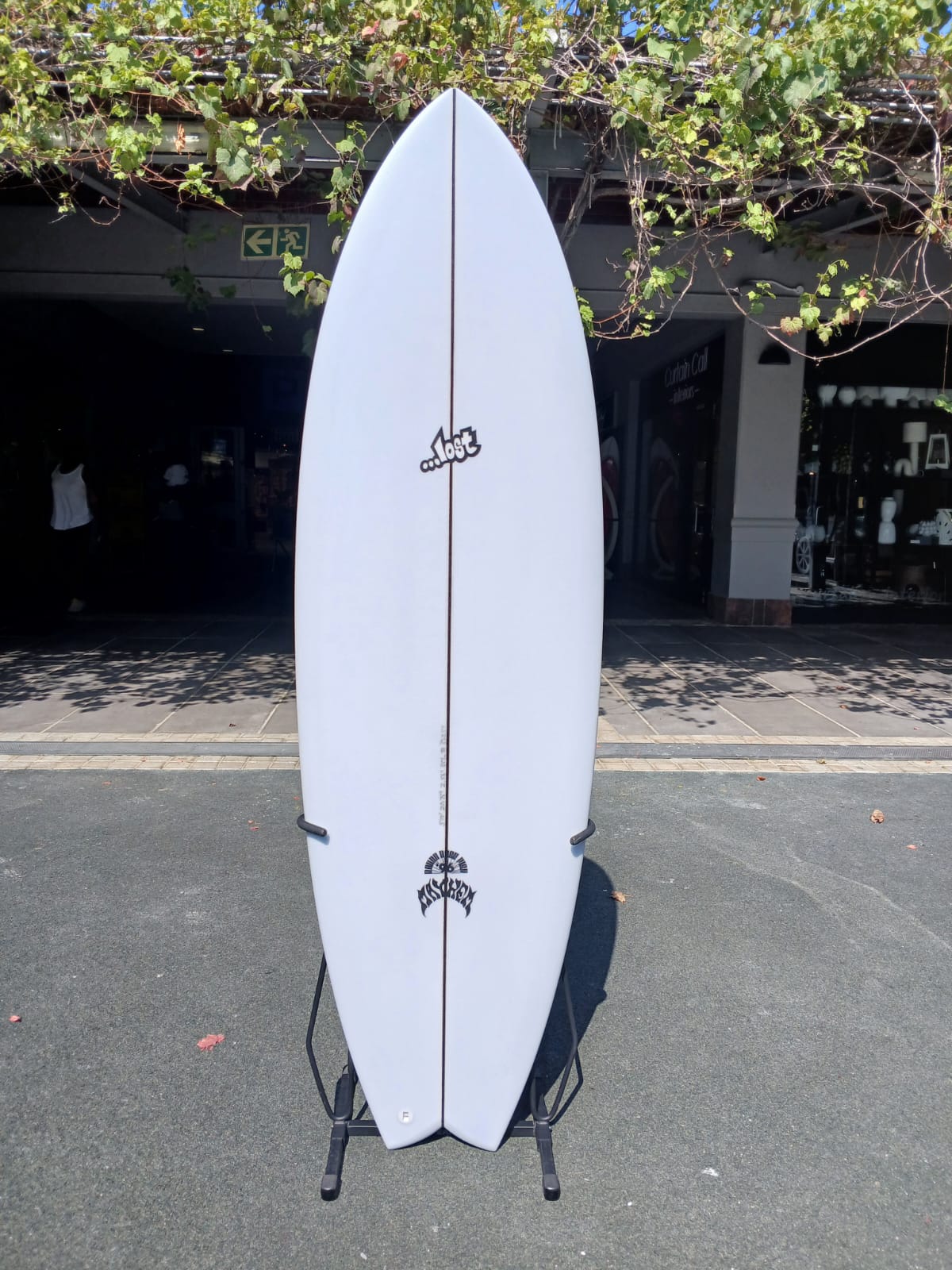
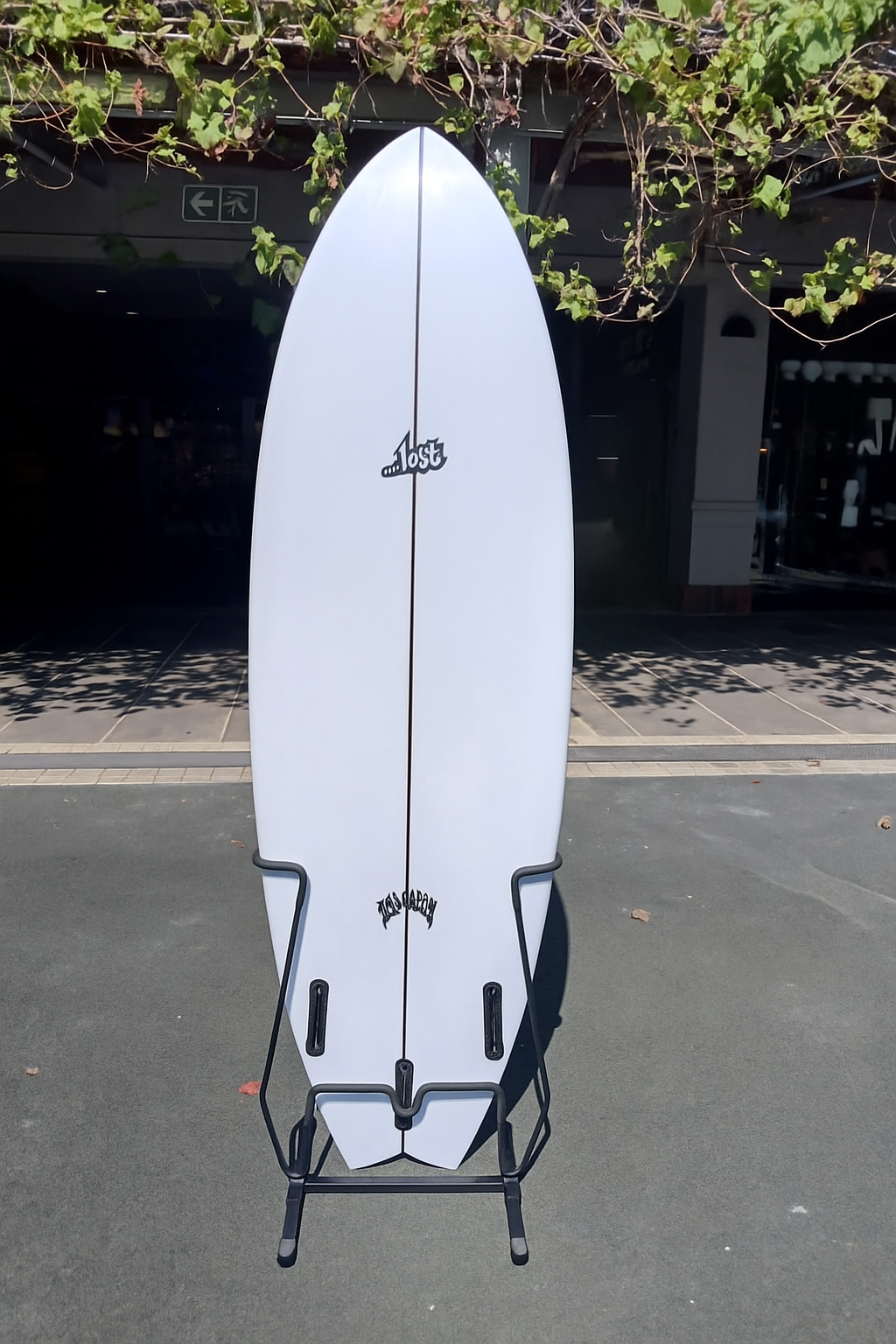
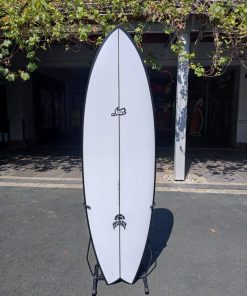
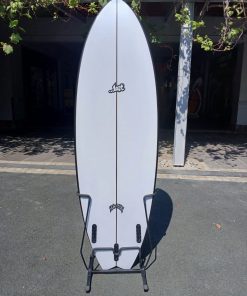
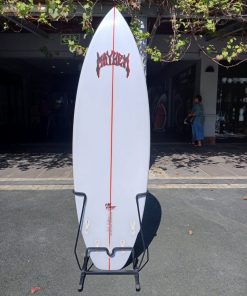
Lost by Mayhem Round Nose Fish 96 5’10”
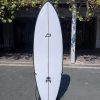
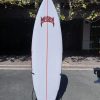
R12,500.00
 Pay over 3 EQUAL zero-interest instalments of R4,166.67 with PayJustNow.
Find out how...

HOW IT WORKS
PayJustNow allows you to pay for your purchase over 3 payments with 0% interest and no fees. Pay a third at checkout and receive your goods immediately. The remaining two instalments are debited on your selected instalment dates.

Browse online or in-store and proceed to checkout

Choose PayJustNow as your payment method
Create your account and receive an instant approval decision
Complete your transaction
WHAT YOU WILL NEED

Be over 18 years old
Be a South African resident
Have a debit or credit card
Have a valid email address
0% INTEREST. 3 PAYMENTS. NO STRESS.
WHY PAY ANY OTHER WAY?
Only 1 left in stock

The RNF-’96… Having shaped multiple variations of “fish” from fall 1994 – 1995, we had created a bit of momentum with the designs. Leading into Winter ’95/’96, we had refined a basic design where we were able fine tune, replicate and re-size the original RNF (by hand) with some consistency. We continued to build small quivers for both Chris Ward and Cory Lopez and sent them everywhere, with Cory taking various versions to each stop on WQS tour.
These 1996 Fish were all hand shaped and not the most consistent creations, but they became the basis and the building blocks towards offering the design to people outside our own circle of friends. They were the boards that teenaged Chris n Cory took to the North Shore and essentially made their indelible mark on the surfing universe.
The RNF-’96 is based with reverence, but not 100% compliance, to original “fish” we developed for Chris and Cory in the year leading up to the 1997 seminal surf film 5’5” x 19 1/4”. While very few specimens from this era still exist (at least in our possession) and most that do are very thin and imperfect relics of Cory’s boards (we can’t find any of Chris’ from the era, at all) some of the re-creation and execution comes down to doing what looks and feels right …and what will work best.
I still have the remains of a 5’10 x 20” x 2-5/8” personal craft. A board I carried to Durban SA, in July of ’96. This was a liberating, small wave life changing board in my path, not only as a designer, but as a surfer who struggled with the status quo boards of the mid 90’s. This board allowed me to surf very small, rip-able waves in and around the Durban Piers for a couple weeks that year. I’d never before had so many people (including other shapers) ask me “what are you riding?” and knew then we were on to something more than just frivolous fish fun. These designs were something the entire surfing world could grab on to and enjoy.
I’ve always felt the key difference between our RNF and the majority of others, from the 90’s and beyond, is the fact that our outline was always more based off of MR inspired, high performance, competitive minded, twin fins of the late 70’s/early 80’s. Relatively pulled in tails, developed through trial and error, for maximum performance and control…not just in small surf, but in all size and shape of waves.
Plainly put, most fishes since this time were predominately influenced by kneeboards. Inspired from early 70’s style, Lis inspired, wide tail, parallel outline kneeboards that transitioned well to stand up surfing in small waves, but have battled to come near peak performance of modern shortboards ever since. Our fish was always about performance, not just a crutch to go fast on in small surf.
For the sake of better surfboards, we’ve taken a touch of liberty. Based off the past 25 years of board building, we tried to create a consistent (and dare say better) surfboard, faithfully based off, but not necessarily exacting to the varied RNF of 1996. With diligent testing being done by many of our top team, including Kolohe, Coco, Ian Crane, Crosby Cola and other “guests” (and even pedestrian testing by myself) in the last few months of 2020, we are very confident that the RNF-’96 will perform at and above expectations, as an all-around, rip-able fun machine, for a wide level of surfers.
FEATURES
- Rocker curves: Remain engrained to the original proven curves.
- Outline curves: Both nose and tail were usually the same width at 12” and remain true, but with more precision, including added curve and width around 6” from the tail. One “secret” about the original’s success was that, unlike most all other “fish” the tail width on ours was closer to that of a typical HP Shortboard. This allows much more control off the tail than typical fish designs.
- Bottom Contours: The classic single concave to double concave, accelerating vee combination are defining design elements and hold true to adherence.
- The Thickness Flow, Deckline, Rails, and Tail Foil: They were all over the map in those rudimentary hand shape days. Each board was different, with most of them having noticeably different curves and thickness from one rail to the other.
- In re-creating these boards, which one is correct? In the end, I went with gut feeling on what would work best.
| LENGTH: | 5.10″ |
| WIDTH: | 20.75″ |
| THICKNESS: | 2.56″ |
| VOLUME: | 35 Liters |
| TAIL: | Fish Tail |
| FINS: | No Fins |
| FIN-SETUP: | 3 Fin Futures
Black Plugs |
Related products
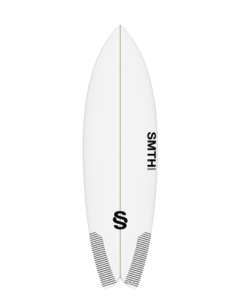
New Boards In-Store
New Boards In-Store



New Boards In-Store
Lost by Mayhem


Astro Pop

Lost by Mayhem
